The power of magic existed in everything on Talamhan, from the inhabitants down to the soil itself. The magic, a unique form of energy, generated from a simple genetic matrix found in all matter. This matrix is not found anywhere else in the known universe and attempts to recreate it produce fruitless results. This worldwide energy source can only be tapped by a mage.
Magi made up a very small percentage of the populace that could control and manipulate this energy, and this ability tended to be hereditary. The mage acted as a conduit to draw the energy from other entities and redirect it in a controlled flow. A language of symbol-type letters and words were used to exercise that control, but only mages could understand and use the language effectively. The reason for this particular phenomenon is unknown, but it is speculated that it was intended as a type of safety device.
The language, used in the right combination of words and speech patterns, could produce incantations with predictable results. The speech pattern, or inflection, was of the utmost importance. The same word, accented in different ways, could yield greatly varied outcomes. It was also necessary for the mage to understand the different sounds as well. Using a long “A” as opposed to a short “A” could make all the difference as well.
Incantations follow a structure that’s designed in two stages. The first is a releasing stage. This stage draws the energy into the mage from everything around him and holds it, much like a battery. Magi have minor genetic differences that allow their bodies to contain large amounts of the energy without doing damage. This difference, often referred to as a “gift,” is what allows the magic to work. With intense study and devotion, a person without the gift could possibly learn to speak and use the language, but the usage would destroy them as they lack the physical trait to absorb and retain the energy safely. The result is very much like intense, immediate radiation poisoning. The second stage of the spell actually interacts with the absorbed energy to achieve the desired result, which is the caster’s discretion. This manipulation can result in something as simple as a flash of light to an entire sentient being.
Another unique oddity, about the language itself, comes from the shape of the letters. The twenty-six unique shapes tend to focus and hold more energy than any other groupings of cells. Although untried or proven, it is also speculated that incantations requiring small amounts of energy could utilize the written shapes as a conduit for the energy instead of a mage, which is probably another safety feature.
This vast amount of power made magi highly sought after, feared, and respected. Various kingdoms and clans all desired a mage of their own. Those that could not secure a mage could contract with magi that sold their services to the highest bidder. It quickly became a power struggle that led to conflicts, and ultimately, to the Great War.
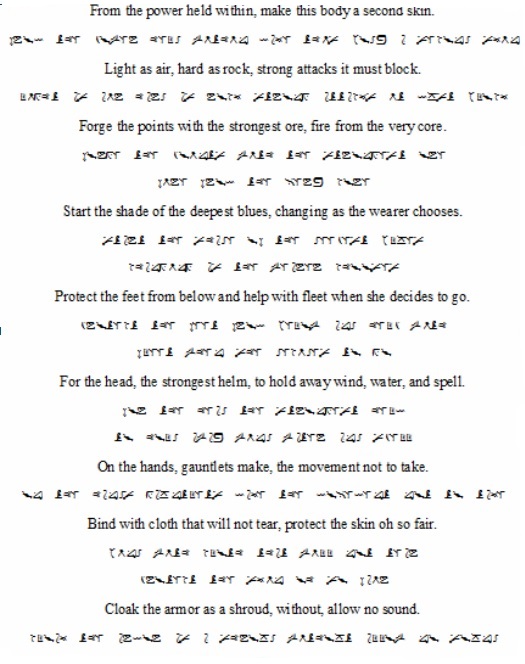
An example of a unique Talamhanian incantation is shown below, translated into Earth English in its original form. With magic, saying a spell is unique means a magic user created the incantation himself for a specific purpose. Many common spells can be found in books that instruct on the purpose and correct casting.
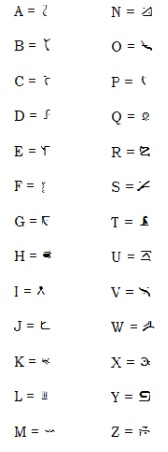
The letters listed below are loose translations from Talamhanian to English. The translations are not exact, but they are as close as possible. A phonetic example of Talamhanian words is useless, as only true Talamhanians possess the physical ability for proper pronunciation.
 WriteWorks